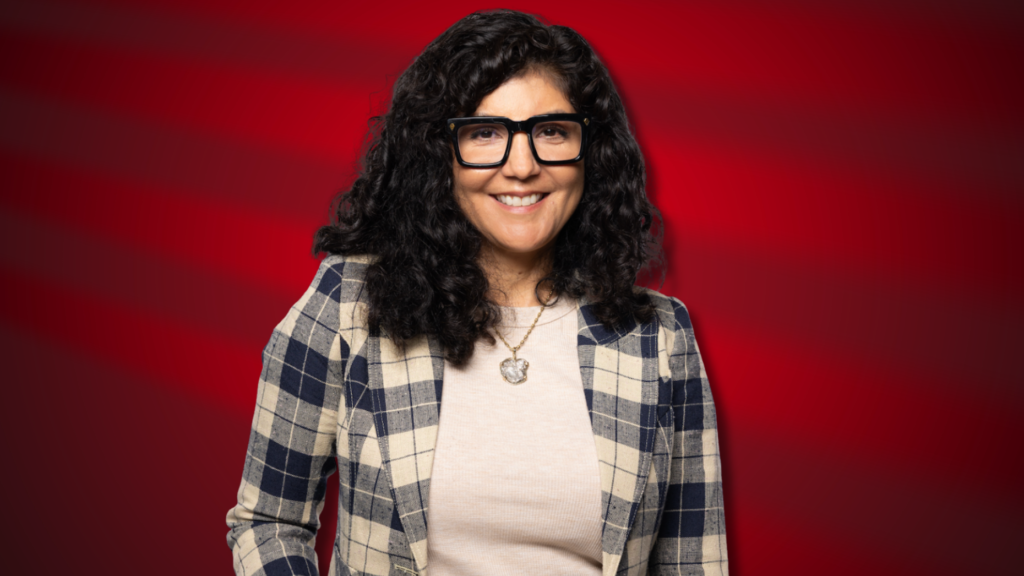

Sandra Howard is a marketer’s marketer.
The former AT&T and Southwest executive, who was behind the budget airline’s award-winning “Bags Fly Free” campaign, discusses marketing like Martin Scorsese does films, like Rick Rubin does music or Gary Keller does real estate. Her excitement is palpable as she peels back the curtain on Southwest’s latest moves — “Change doesn’t mean a company has lost its way,” she said of the airline’s recent policy changes — and gushes about Nike’s new marketing campaign that spins its trademark tagline into a thought-provoking question.

Sandra Howard
“Nike, in one of the NFL games last night, changed their tagline to ‘Why do it?’ It’s an amazing commercial and is another proof point of how a brand is thinking about performance, its product relevance for culture today, in a way that keeps it honest to what it always has been.”
It’s “a brand that is resilient and can anchor itself to what’s important and meaningful and never lose sight of that and yet understand where the actual re-energizing, reinvention, evolution of that anchor is,” she continued.
Howard sees a similar future for Keller Williams, which has grown from a regional force to a global powerhouse with more than 180,000 agents.
“We do so much that I don’t think somebody who is not inside the Keller Williams community understands,” she said. “It’s not good enough if we have all this greatness, but it’s somehow, for lots of reasons, getting lost in the shuffle.”
The following conversation has been edited for length and clarity.
Inman: I’m super excited to chat with you today. To start, I’d like to know more about you. What sparked your love for marketing? And how have you developed your marketing philosophy over the years?
Howard: That’s a ginormous question.
Honestly, I fell into the love of marketing from my observations of what is considered trendy and or a fad, and this idea that things in your life, brands included, of course, can do one of two things: They can come and go and fizzle out very quickly, or they can stand the test of time.
There was a point where I was in my 20s, and I was literally wearing the same brand of jeans as my mom, and it was a pair of Levi’s, and I thought, ‘Wait a minute, why am I doing this?’
So, I really was fascinated by using Levi’s as an example of how brands can maintain their relevance across different audiences, clearly across multiple generations, while hanging on to their DNA. They can keep the essence of what makes them them, yet have the innovation and, what I would call, the reinvention at the edges to maintain their relevancy and become timeless.
You know a lot about brand loyalty, from, of course, wearing Levi’s to creating it at brands like AT&T and Southwest. So, what are some of the lessons that you’ve learned at those previous companies that you’re bringing to KW?
There is a set of values that anchor the brand, and those values speak to consumers who come back time and time again. And so, for Southwest, those values have been anchored around customer service, transparency and simplicity. Southwest Airlines is very public about the fact that employees are treated as their target audience, and when you treat your employees right, those employees will, in turn, keep customers happy.
So, as I think of some of the lessons learned, as with any industry, there’s so much volatility, whether it’s economic forces or a change in consumer behavior or preferences. Brands need to know how to flex in those times.
For my tenure at Southwest Airlines, Bags Fly Free was an initiative that I worked on, and it was an incredible moment in time. It was the right place to show where the brand stood for customer service and offering the best value, given what was happening competitively, where other airlines had what we called a lot of ‘hidden fees.’
Bags Fly Free was really a key initiative and pivotal for Southwest. Doubling down on your brand’s ethos and brand values can turn into amazing results for customer retention, as well as overall revenue, and if I have my numbers right, I think that initiative ended up adding about $800 million to the bottom line because it was so well-received. It really broke through during that time.
Obviously, times are different now.
Yes, they are. As a longtime customer, the bag fees and open seating changes are annoying. But, even so, Southwest still offers the best deal for my traveling needs. What can brokerages learn from how Southwest has handled introducing these changes to consumers?
There’s been a lot of coverage in the media about what these changes mean for Southwest, and the narrative has been that the brand, in a way, is losing its identity.
But when you think about demonstrating proof points of who you are, there are many levers, right? When you look at the overall picture for Southwest, I believe that the brand still provides, in many cases, the best overall value for what customers are getting, meaning total ticket price. So leave it up to the brand to pull, or not, one of its many levers that it has to deliver on the overall proposition, without necessarily focusing on one singular proof point.
And bringing it back to Keller Williams, what I love so much about this brand is that it’s built on being a company that invests in growth so that entrepreneurs can thrive, right? We’re not just considering agents as salespeople, but we consider agents as business owners.
We contribute to the success of those entrepreneurs by investing in growth and using education as an engine. In fact, I don’t think anyone invests more in growth than Keller Williams. We have multiple proof points. We have events like Mega Agent Camp. We have Keller Williams University. We have Keller Williams MAPS Coaching, and we obviously have very well-known books that are published by Gary and other leaders of the company.
If one of those things were to change or go away in the future, and I don’t think that it will, but if it did, it doesn’t mean that we have lost our way, and Keller Williams is no longer investing in education or growth. It means that we are choosing to deploy the levers differently.
I think perhaps that’s really the interesting dynamic today, where companies make one change, and then all of a sudden, either consumers or investors, think, ‘Oh, this brand has lost its way.’ That’s not how it works. It’s just one proof point that needs to be either replaced or improved.
Just like the airline industry, the real estate industry is navigating immense change. I, and many others, point back to 2020 as the beginning of this latest cycle — mortgage rates, home prices, consumer needs, tech, etc., are in this constant ebb and flow, and you can either ride the wave or get swept under it.
In what ways is Keller Williams excelling in pulling its levers, telling its brand story, and being the brokerage of choice for agents and consumers? And where is there room for improvement?
I’ll start with how we show up in an environment where an agent has many, many options. And, you know, first and foremost, in the short term, for me, it is about delivering our story — clarifying it first, but delivering it in a consistent way across our entire ecosystem.
So, for our brand value, we are the place where entrepreneurs thrive. In my two weeks of observation since joining KW, the ecosystem itself has had the flexibility to market itself in many different ways. So, having now a little more structure around our story, clarification of that story, and providing our agents with the frameworks for how to represent not only themselves but also the brand with more consistency and continuity is the goal and what is being asked for as well.
I’m sure that when an agent chooses a company, no matter what company they choose, they’re not in the business of trying to become a brand marketer for themselves. And so when it comes to ‘why choose Keller Williams,’ it’s because Keller Williams is going to be the company that best equips you for all of the things that you need to learn and grow and become the most successful entrepreneur.
Quite frankly, the ability, the need to tell who we are [and] what we do can demonstrate those leadership proof points with consistency, [which] is where I see the biggest opportunity.
So, the other part of KW’s target audience is consumers. Homebuyers and homesellers have hundreds of choices in agents, who all advertise similar value propositions. How does KW make its focus on entrepreneurship translate to consumers? What difference does it make to a consumer whether an agent sees themselves just as an agent or as an entrepreneur?
We have 200,000 agents who, in essence, are the brand. We are, in fact, representative of each and every community, each and every neighborhood.
And ultimately, what I would say we in marketing have to deliver, first and foremost, is local relevance. But then, sitting above that is the overall brand strength. And we need to ensure that the story of Keller Williams — which is that our agents are the strongest, most well-rounded, most knowledgeable agents — comes through.
If I want to hire a personal trainer, I want to hire a personal trainer with credentials because I know this personal trainer knows more than someone else. And in essence, that really becomes where the trust and where the safety is in choosing Keller Williams, because no other company provides the 360 ecosystem of personal development, learning and growing.
We are only successful when we help others succeed, so our agents are not on their own to figure things out. We are a community helping each other thrive.
So one agent has the power of all of that behind them, and that, to me, is where the connection is made. I see this one individual who’s going to help me buy or sell a home, but it’s really not this one person. It’s this one person with an imaginary 200,000 people behind them, supporting them, and that’s the recipe for success. All of that is fueled and pumped into this one person that you’re choosing.


