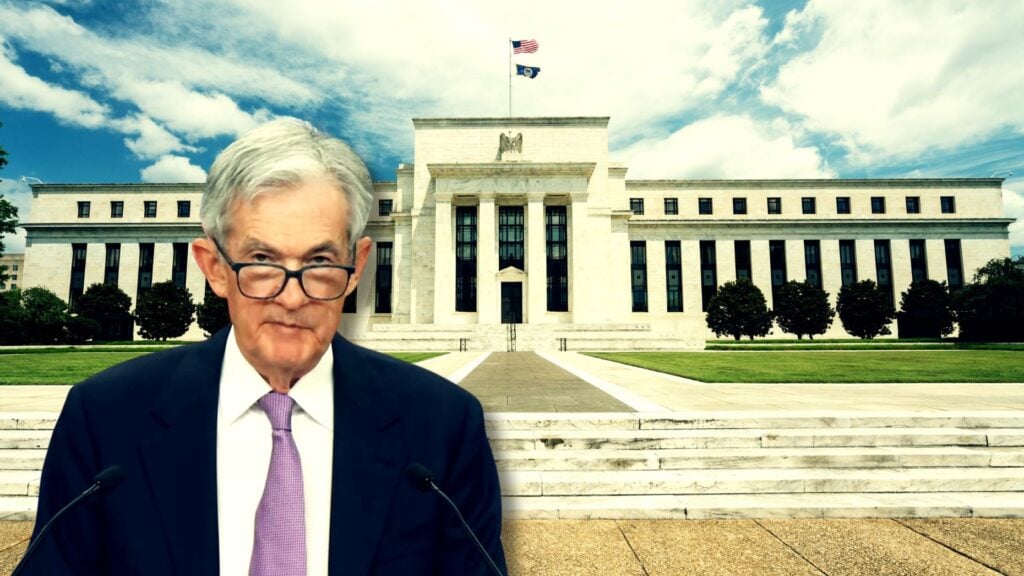
Federal Reserve Board Governor Adriana Kugler — a Biden appointee whose resignation in August allowed the Trump administration to appoint a close ally of the president to the board — violated policies governing central bank policymakers’ personal investments, according to a financial disclosure form she submitted after resigning.
Atlanta Fed President Raphael Bostic, whose investments have also come under scrutiny, announced last week that he’ll retire at the end of February — renewing speculation that Trump will attempt to undermine Fed independence by exerting influence over the appointments of regional bank presidents.
The Fed’s policies for personal investments held by policymakers and employees with access to sensitive information were tightened in 2022, following the resignations of Fed regional bank presidents Eric Rosengren and Robert Kaplan over criticism of their investments.
The policies prohibit members of the rate-setting Federal Open Market Committee (FOMC) from owning shares in individual companies, or trading other investments they hold such as mutual funds during blackout periods that begin 10 days before Fed rate-setting meetings and remain in effect for a day after the meetings conclude.
In her Sept. 11 financial disclosure report — released over the weekend by the U.S. Office of Government Ethics — Kugler listed trades of shares in individual companies including Apple, Southwest Airlines, Cava Group and Caterpillar. Some of those trades were carried out inside of the blackout periods in effect for rate-setting meetings in March and April of 2024.
As was the case with four trades of shares in Apple and Cava Group previously disclosed in a 2024 financial disclosure report, Kugler said the trades were made by her spouse, immigration attorney Ignacio Donoso, without her knowledge.
“Upon learning about the purchases, I immediately notified ethics officials, and at their direction, I initiated divestiture of these assets as soon as possible under FOMC ethics policies,” Kugler stated at the time.
The Office of Government Ethics declined to certify Kugler’s latest disclosure report, and said the Federal Reserve Board’s Ethics Office had referred “matters related to the disclosure” to the Fed’s independent Office of Inspector General.
Rosengren, Kaplan and Bostic’s trades
Last year the Fed OIG issued a report on controversial purchases and sales of investments by Eric Rosengren, former president of the Boston Fed, and Robert Kaplan, who was the president of the Dallas Fed.
The Fed OIG determined that Rosengren did not report multiple trades in a 2020 disclosure, and questioned his trading activities in real estate investment trusts (REITs) in 2020, “during a time of financial market volatility that prompted the Federal Reserve to authorize the purchase of agency mortgage-backed securities (MBS).”
Those trades created an “appearance of a conflict of interest … that could cause a reasonable person to question Mr. Rosengren’s impartiality under FRB Boston’s code of conduct,” the Fed OIG determined.
While Kaplan’s 2020 trades did not violate laws, rules, regulations, or policies in place at the time, his failure to report specific dates of trades, including stock options, “did not support public confidence in the impartiality and integrity of the policymakers and senior staff carrying out the public mission of the FOMC’s work,” Associate Inspector General Stephen Carroll wrote.
More recently, the Fed OIG looked into trades made from 2017 through 2021 by Atlanta Fed President Raphael Bostic, and concluded that they violated Federal Open Market Committee rules and Reserve Bank policies governing blackout periods, financial disclosures, prohibited holdings, and preclearance requirements.
The Fed OIG found no evidence that Bostic’s trades were based on confidential FOMC information, or that he had financial conflicts of interests, the OIG said in a Sept. 4, 2024 report.
Although Bostic used third-party managed accounts and had no ability to direct specific trades, he was nonetheless “responsible for ensuring that all trades and investments made on his behalf complied with all applicable rules.”
By not doing so, Bostic created an “appearance of acting on confidential FOMC information under the FOMC blackout rule and an appearance of a conflict of interest that could cause a reasonable person to question his impartiality under FRB Atlanta’s code of conduct,” the Fed OIG found.
Trump eyes tighter control of Fed
Bostic announced on Nov. 12 that he won’t seek another term as Atlanta Fed president when his term is up at the end of February.
That’s undoubtedly seen as good news at the White House, as the Trump administration and Federal Housing Finance Agency Director Bill Pulte have been pressuring Fed Chair Jerome Powell and his fellow FOMC members to lower rates.
Bostic is rated by Reuters as one of the most “hawkish” members of the committee on inflation and less receptive to cutting rates.
“With each step, we get closer and closer to neutral in ways that make me uncomfortable,” Bostic said on Oct. 31 of his reluctance to keep cutting rates after the Fed signed off on its second rate cut of the year.
The Aug. 8 resignation of Kugler gave Trump the opportunity to nominate Stephen Miran, chair of the White House Council of Economic Advisers, to serve out the rest of her term, which expires in January. Miran was confirmed on Sept. 15 in a 48-47 Senate vote, with Republican Sen. Lisa Murkowski of Alaska joining Democrats in voting against confirmation.
When the Fed voted to bring rates down by 1/4 of a percentage point in September, Miran was the lone dissenter, holding out for a bigger, 1/2 percentage point rate cut advocated by the president.
Miran cast another dissenting vote when the Fed brought rates down by another 1/4 percentage point on Oct. 29, but this time his call for a 1/2 percentage point cut was countered by Kansas City Fed President Jeffrey Schmid, who argued that short-term rates are already low enough.
The Fed doesn’t have direct control over mortgage rates, which have been on the rise since Powell warned at a press conference after the October meeting that another rate cut in December is not a given.
The addition of Miran to the Federal Reserve Board has sparked speculation that Trump might try to exert more control over the Fed.
Powell’s tenure as board chair ends in May.
But the terms of all 12 presidents of the regional Federal Reserve banks are up for renewal in February. While each regional bank has its own board which appoints a president, those appointments are subject to approval by the Federal Reserve’s Board of Governors.
If Trump succeeds in ousting Federal Reserve Governor Lisa Cook, he will have appointed a majority of the Fed’s governing board — potentially setting the stage for the administration to remove regional Federal Reserve bank presidents it doesn’t agree with. It’s an option the Trump administration has been mulling since August, Bloomberg News reported.
Such a challenge “likely would provoke a messy legal battle that entangles not just the regional Fed presidents but the dozens of business executives, bankers and community leaders who serve on their boards,” Reuters reported last week. “But Trump has not avoided pushing such boundaries.”
The prospect of the White House interfering in the selection of regional Fed bank presidents is “deeply unsettling” to Allianz Chief Economic Advisor Mohamed El-Erian.
“If Governor Cook is eventually replaced with a close Trump loyalist, the board could secure enough votes to complicate the reappointment in February of every president of the 12 regional Federal Reserve banks, threatening to politicize the entire system in an unprecedented and unpredictable fashion,” El-Erian wrote in a Yahoo Finance op-ed.
The Trump administration is seeking to remove Cook from the Federal Reserve Board, citing mortgage fraud allegations leveled by Pulte. Cook says she’s innocent, and the Supreme Court has upheld lower court rulings blocking Trump from firing her pending a January hearing.
But if the Trump administration does succeed in replacing Cook with an ally, flexing the Board of Governors’ power to reject appointments of regional bank presidents could backfire.
Such a move “could mark the end of the Federal Reserve’s independence from White House control, which it effectively obtained in 1951” and reignite inflation, The Wall Street Journal‘s chief economics commentator, Greg Ip, fretted in August.
Undermining confidence in the Federal Reserve’s independence could make investors less eager to fund U.S. debt. If investors get cold feet about buying government bonds and mortgage-backed securities, that could push long-term interest rates higher — even if the Fed cuts short-term rates.
When the Fed cut the short-term federal funds rate by a percentage point at the end of last year, mortgage rates went up by an equal amount as inflation moved away from the central bank’s 2 percent target.
Get Inman’s Mortgage Brief Newsletter delivered right to your inbox. A weekly roundup of all the biggest news in the world of mortgages and closings delivered every Wednesday. Click here to subscribe.


