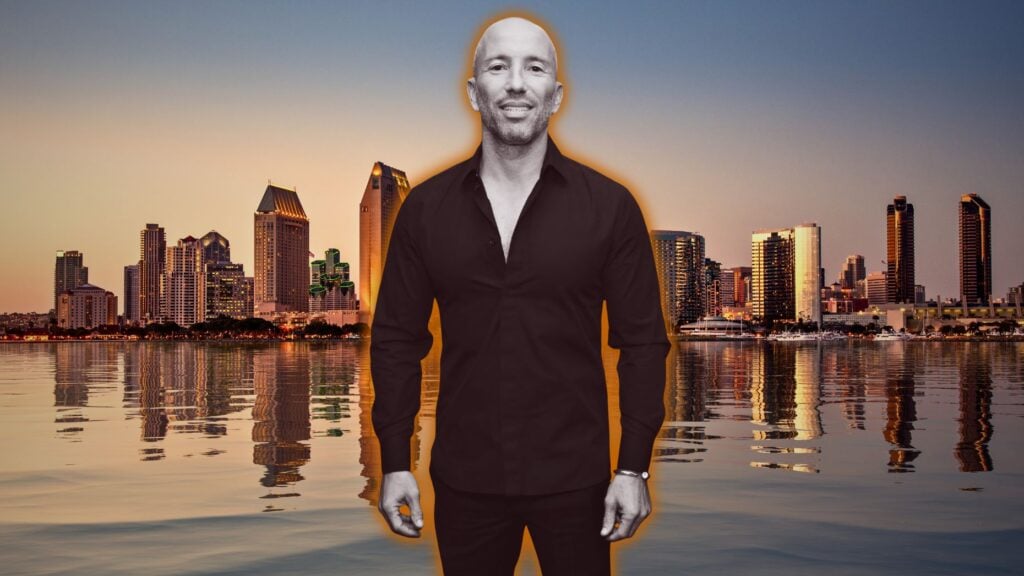

Jason Oppenheim isn’t losing sleep over the merger wave reshaping the brokerage industry. What concerns him is what comes after.
“The headcount is not the concerning part,” Oppenheim said in an interview with Inman ahead of Inman Luxury Connect in San Diego. “The weight that they have to shape policy is more concerning, because they will shape policy to forge their own interests at the expense of other brokers.”
TAKE THE INMAN INTEL INDEX SURVEY
Oppenheim, who leads the Oppenheim Group with offices in Newport Beach, San Diego and Los Angeles, said he has watched the consolidation cycle largely from the outside. Luxury brokerages, he said, are sheltered from the competitive pressure most independents feel. But he has grown more focused on the downstream policy implications — particularly as they relate to Compass.
“I think the danger comes when you see things become anti-competitive,” he said. “Compass is consolidating in an effort to increase leverage and shape policy, and I think that needs to be carefully considered by the industry.”
That policy concern centers on Compass’ private exclusives program, which allows listings to circulate within the Compass network before hitting the MLS. Oppenheim has criticized that strategy and said little has changed his view.
“It really is only appropriate for 1 [percent] to 2 percent of sellers in very unique situations, and yet Compass pitches it to closer to 100 percent,” he said. “I don’t believe that agents should be pushing a policy on sellers when it’s likely not in their interest — and that’s what’s happening. The majority of sellers have been pitched a policy that’s in the interest of the agent and the interest of the agent’s broker, but it’s not in the interest of the seller.”
He added that the program appears to have limited practical effect. Oppenheim said he believes approximately 97 percent of Compass listings that begin as private exclusives eventually come to the MLS. “Clearly the only function is as a way to get a listing,” he said.
The stakes, in his view, are higher than listing exposure. Oppenheim said the logical conclusion of Compass’ strategy — consolidating market share while controlling a private inventory network — is that buyers could eventually be required to work with a Compass agent to access Compass listings.
“I just don’t see how that’s not going to be a class action lawsuit,” he said.
Zillow filed suit last week against a Chicago-area MLS over listing access — a development Oppenheim sees as a direct response to the same dynamic. He described the broader moment as “a race to the bottom,” with portals and large brokerages competing to control inventory in ways he said ultimately harm buyers and sellers alike.
‘It’s been brutal’: LA luxury stalls as other markets move
Away from the policy debate, Oppenheim’s spring market report is mixed. Newport Beach and San Diego are active, he said. Los Angeles is not.
Sales above $5.3 million — the threshold that triggers the city’s Measure ULA transfer tax, known as the LA mansion tax — have run under 30 transactions a month for most of the past year, he said.
“It used to be 60 to 70 a month,” Oppenheim added. “It’s been brutal.”
At Connect, Oppenheim wants a debate
At Inman Connect San Diego, Oppenheim said he wants to revisit a debate he started last year: A live argument over private exclusives, ideally with a Compass representative willing to defend the policy.
“I’m mildly obsessed with that argument against the private exclusive,” he said. “I’d love to debate somebody at Compass willing to defend the private exclusive.”
He also pushed back on what he called an industry obsession with AI and technology, saying the conversation has outrun the reality — at least in luxury real estate.
“I don’t think it’s affected my market that much. I don’t think it will,” he said. “All these new brokerages are trying to pretend like it’s so important, and it’s just not.” Agents, he argued, are insulated from displacement in ways most white-collar workers are not, because of the physical and relationship-driven nature of the work. Tech, he said, “can help around the edges” — but he wants to see the industry be honest about its limits.


