
Haslet, Texas, had roughly 2,000 residents when the 2020 census counted them. By 2025, the town had around 5,267 residents, according to Census Bureau estimates. That’s a nearly 167 percent increase in five years, making it one of the fastest-growing municipalities in the already fast-growing Dallas–Fort Worth metroplex.
TAKE THE INMAN INTEL INDEX SURVEY
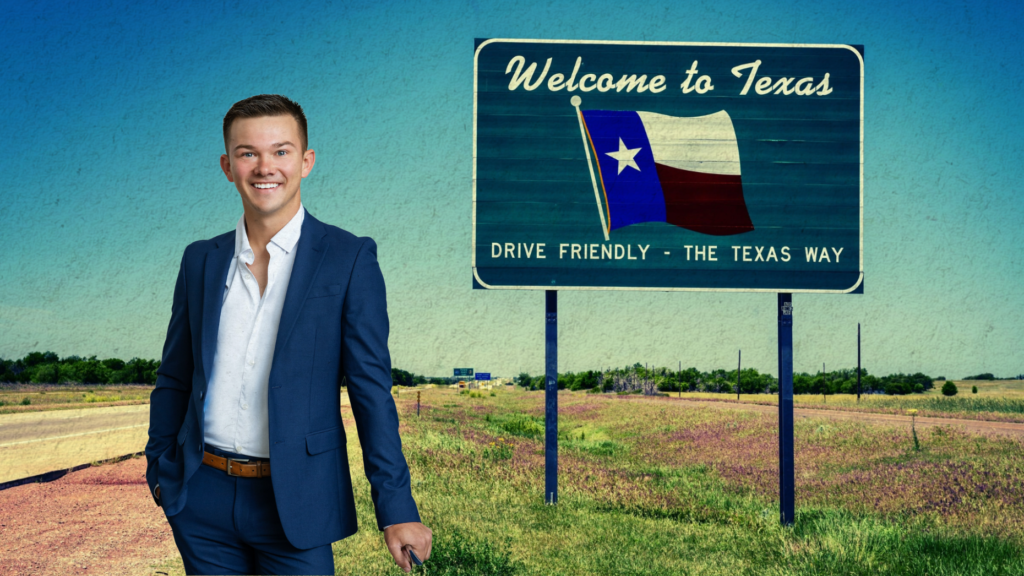
Real estate agent Curtis Rose was already there.
“I feel like there aren’t too many agents right now going heavy on the Haslet area,” Rose, a North Fort Worth–area agent currently with Keller Williams, told Inman. “But I think over the next year, this is going to be one of those areas that people focus on.”
Rose has been a licensed Realtor for nine years and has spent the past four of them growing his business in North Fort Worth towns like Haslet. Haslet is one of the many small- to mid-sized suburban towns in the U.S. that are growing at a rapid clip, according to the U.S. Census Bureau’s Vintage 2025 population estimates released on March 14.
The Census data revealed that 8 of the 15 fastest-growing cities in the U.S. with populations of 20,000 or more between July 1, 2024, and July 1, 2025, were in Texas, and four of those were in the Dallas–Fort Worth metroplex alone.
Celina, Texas, led the nation for the second straight year with nearly 25 percent growth, reaching 64,427 residents, while Princeton, Melissa and Anna — all DFW exurbs — also cracked the top five.
Fort Worth, Texas, had a numeric increase of 19,512 people between July 1, 2024, and July 1, 2025, the second-largest increase nationally and behind only Charlotte, North Carolina. With the increase, Fort Worth’s population surpassed 1 million.
Rose is right in the middle of that action, working on luxury deals in the North Fort Worth area, including Haslet, Southlake, Westlake, Argyle and Northlake. He has roughly $155 million in career sales volume, 263+ closed transactions, and an average sale price of $796,347. He lives in Haslet and works in the corridor that he’s gotten to know very well.
What’s it like being a real estate agent in one of America’s fastest-growing markets? Inman checked in with Rose recently to learn more about his experience.
Steady while Fort Worth proper cools
Haslet sits on the northern edge of Fort Worth, where the broader market has shifted toward buyers since its pandemic-era peak. In Fort Worth, the median home price fell nearly 1 percent year over year as of March 2026, according to Redfin data. Homes are sitting on the market six days longer than they were a year ago, and sales volume has edged down.
Rose describes the Haslet and Alliance corridor submarket he works in as “steady” — neither a buyer’s nor a seller’s market. Redfin data on Tarrant County, which includes Haslet, bears that out to some extent: Prices were essentially flat year-over-year as of March 2026, homes are selling slightly faster than a year ago, and sales volume is up modestly.
Haslet is roughly 30 minutes from Southlake and downtown Fort Worth. Rose said it’s not a destination market so much as a convergence point. It’s close enough to corporate employment centers to draw transplants and far enough out to offer the space and privacy that pandemic-era buyers started demanding and haven’t entirely stopped wanting.
“Everybody used to want the super low maintenance and tiny yards,” Rose said. “Now it feels like everyone’s wanting as much privacy as they can get, as much peace and quiet as they can get.”
Rose added that the people moving to Haslet and the Alliance corridor are “high-income earners, corporate transplants, and families looking for larger lots and highly rated school districts.”
Mike Roberts, co-founder and president of Draper, Utah-based City Creek Mortgage, has also noticed a shift away from city cores in Sun Belt metros such as the Dallas-Fort Worth metro. “This migration from tier-one metro centers is being fueled by an unprecedented demographic shift,” Roberts told Inman.
Roberts said that buyers are no longer looking for just a lower cost per square foot; they are buying in master-planned communities where “they can live their entire suburban lifestyle.” He added that remote work has permanent staying power, allowing families to sometimes entirely bypass the big-city commute.
“Developers are meeting this growing need by quickly adjusting their production to include homes specifically designed for this exact segment of the mid-market,” Roberts said.
Explosive growth and star power
The privacy pitch in exurbs like Haslet comes with an asterisk, though.
Rose is candid with buyers, particularly the out-of-state transplants who’ve been arriving from California and elsewhere, about how infrastructure hasn’t always kept pace with growth. One of Haslet’s main roads is currently being converted from two to four lanes, and traffic is “a little crazy,” he acknowledges.
The Haslet Parkway project, a four-lane east-west thoroughfare designed to handle freight movement and improve resident mobility, is being built in phases as part of a broader $64.4 million AllianceTexas/Haslet Accessibility Project.
“You’ve got to be transparent with everything you do,” Rose said, “because it could be a sticky situation really quickly if not.”
AllianceTexas is a 27,000-acre master-planned, mixed-use development in north Fort Worth, developed by Hillwood, the company led by Ross Perot Jr. It has been under development since 1989, when Hillwood partnered with the FAA and the city of Fort Worth to open Perot Field Fort Worth Alliance Airport as the world’s first industrial airport.
The cultural footprint is also adding a different kind of homebuyer to the mix.
SGS Studios, Yellowstone creator Taylor Sheridan’s massive, 450,000-square-foot production campus, built with Paramount Television in the adjacent Alliance development, is now the largest operating film studio in Texas. Rose said that one of Sheridan’s newer shows, Landman, is currently filming at the local Alliance airport and some Haslet neighborhoods.
Phil McGraw, known to viewers as Dr. Phil, had his Merit Street Media network briefly operating out of the same corridor, though that venture filed for Chapter 11 bankruptcy in July 2025 while simultaneously suing its distribution partner, Trinity Broadcasting Network, for breach of contract. Despite whatever difficulties McGraw may be facing, Rose says both media ventures have drawn even more people to the Fort Worth area and, in turn, to suburbs like Haslet.
Competing with the mega-builders
The growth is good for Rose’s business, but it can complicate his listings.
The same population surge pulling buyers into the Alliance corridor has also drawn mega-builders such as D.R. Horton, K. Hovnanian, Highland Homes and others arriving with in-house sales teams, rate buydowns and closing-cost incentives that resale inventory simply can’t match.
Both D.R. Horton and Meritage have already sold out communities in the area, with a new wave of developments now pre-selling. In pockets of North Fort Worth, Rose says, the concentration of new construction has made selling an existing home “almost impossible.”
“When you have listings, it gets difficult to compete with the incentives that come with new construction with the mega-builders,” he said.
It’s a two-speed market dynamic familiar to agents in other high-growth Sun Belt corridors: The headline numbers look healthy, but the tailwinds are distributed unevenly depending on what you’re selling.
Everyone’s moving this way
Rose relocated to the Dallas-Fort Worth area from Kentucky, where he’d built a stable book of business but saw a ceiling. The calculus was straightforward: more opportunity, more upside. He landed in a market that’s now attracting the same calculation from other agents.
New names are showing up on yard signs in Haslet, and Rose expects the pace to accelerate. For agents who’ve built positioning in places like Southlake or specific Fort Worth neighborhoods, the Alliance corridor and Haslet represent the next concentration point: early enough to establish, growing fast enough to justify the bet.
“There are a lot of Dallas and Fort Worth buyers who don’t want to be in the city anymore,” Rose said. “And everyone seems to be looking to come this way.”